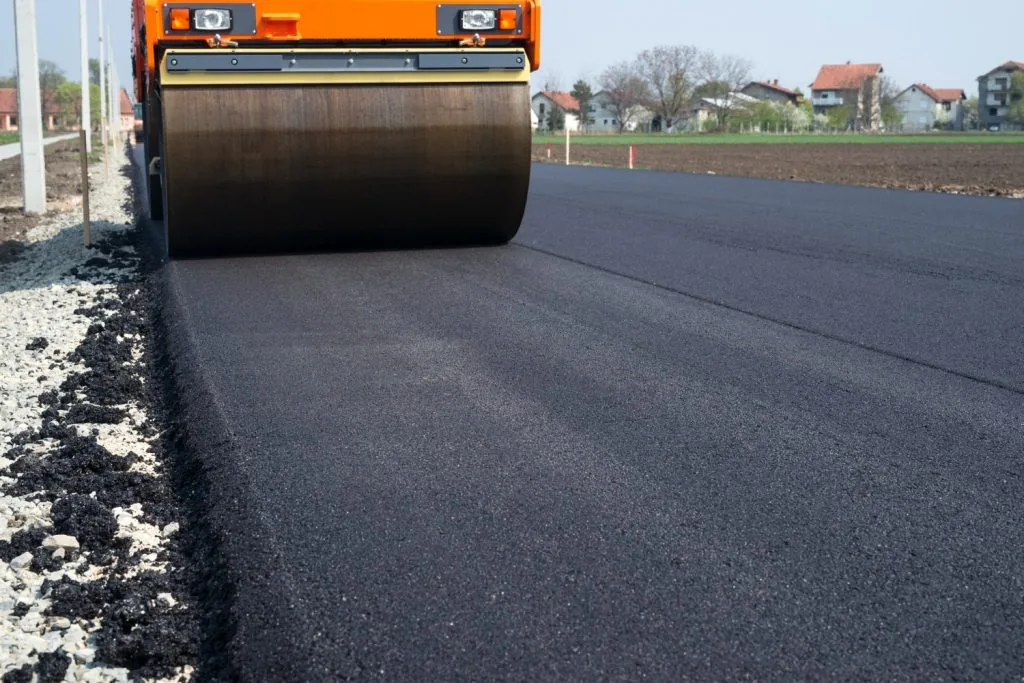
Commercial roadways rely on asphalt paving for its ability to support repeated traffic while maintaining a smooth driving surface. Its flexibility helps manage stress from vehicle loads and temperature changes, and its recyclability allows roadway systems to be updated over time without extended closures or unnecessary material waste.
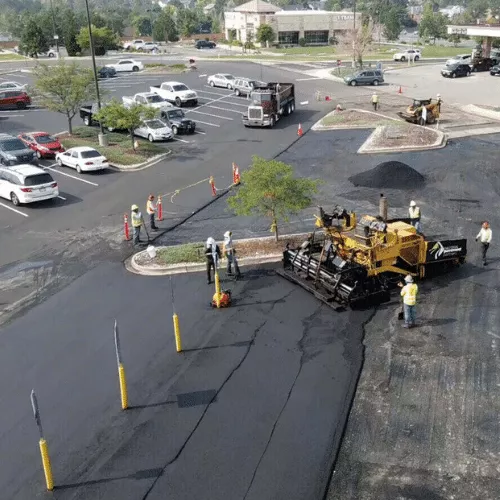
Overlay and resurfacing are often used when pavement surfaces show visible wear, but the underlying structure is still in good condition. Installing a new asphalt section over a properly prepared surface gives worn pavement a smoother, more uniform driving surface while extending its usable life.
In many cases, surface preservation approaches such as microsurfacing are used alongside overlays to help slow future deterioration.
As commercial properties grow or change, parking areas often need to expand to keep up with traffic and usage. Asphalt allows new pavement sections to tie smoothly into existing surfaces, creating consistent performance across the site. Expansion planning also considers drainage, traffic flow, and future maintenance to avoid uneven wear down the road.
Reclamation and repaving are typically used when pavement has reached a point where surface repairs alone are no longer enough. By reusing existing materials and rebuilding the pavement structure, this approach improves performance while helping control material and hauling costs. Processes that include asphalt milling prepare the surface for longer-term service without full removal.
Potholes and localized pavement failures tend to show up at the worst possible time. Left unaddressed, they can create safety concerns and accelerate surface damage. National Pavement Partners evaluates each area to determine whether a short-term repair or a more permanent solution makes the most sense.
Our asphalt repair methods include:
- Skin Patches: Surface-level repairs for shallow damage under two inches.
- Partial Depth Patches: Repairs that replace damaged asphalt layers while preserving the existing base.
- Full-Depth Patches: Structural repairs are used when both surface and base layers have failed.
- Infrared Patching: A seamless, thermally bonded repair method suited for minor to moderate pavement failures.
When pavement shows widespread alligator cracking, patching is no longer effective, and full reconstruction is required to address subgrade failure.