Key Takeaways:
- Asphalt typically costs 30% to 40% less to install than concrete, making it the more budget-friendly option for many commercial parking lots.
- Concrete generally lasts longer with less routine maintenance, but its higher upfront cost can significantly increase the initial project investment.
- Asphalt can usually reopen to traffic within 24 to 48 hours, while concrete often requires about 7 days before vehicles can use the surface.
- Colorado’s freeze-thaw cycles tend to favor asphalt’s flexibility, while concrete performs especially well in heavy-load applications.
- For many commercial properties, the right choice depends on traffic, budget, maintenance expectations, and how long you plan to own the property.
Choosing between asphalt vs. concrete is one of the biggest decisions you’ll make when planning a new commercial parking lot or replacing an existing one. The surface you install today will affect everything from daily operations to your property’s appearance for decades. While upfront cost often gets the most attention, long-term performance has just as much impact on your investment.
At National Pavement Partners, we help commercial property owners and facility managers across Colorado evaluate both options. From busy retail centers to industrial facilities, we know how traffic patterns, weather, and long-term ownership goals all influence the right decision.
In the sections below, we’ll break down the differences so you can choose the pavement that best fits your property, budget, and long-term goals.
Asphalt vs. Concrete: What’s the Difference?
Asphalt uses bitumen, a petroleum-based binder that creates a flexible pavement, while concrete relies on Portland cement to form a rigid slab. That difference influences everything from installation and maintenance frequency to how each surface responds to heavy traffic and Colorado’s changing weather.
| Feature | Asphalt | Concrete |
| Binder | Bitumen | Portland Cement |
| Flexibility | Flexible | Rigid |
| Color | Dark Black | Light Gray |
| Typical Lifespan | 15 to 20 years before resurfacing | 30 to 40 years |
How Asphalt Pavement Is Made and Installed
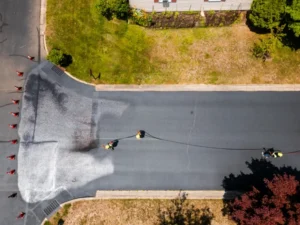
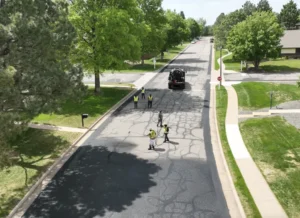
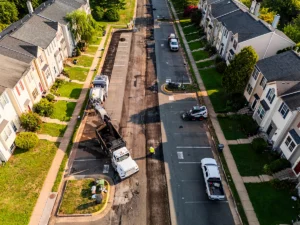
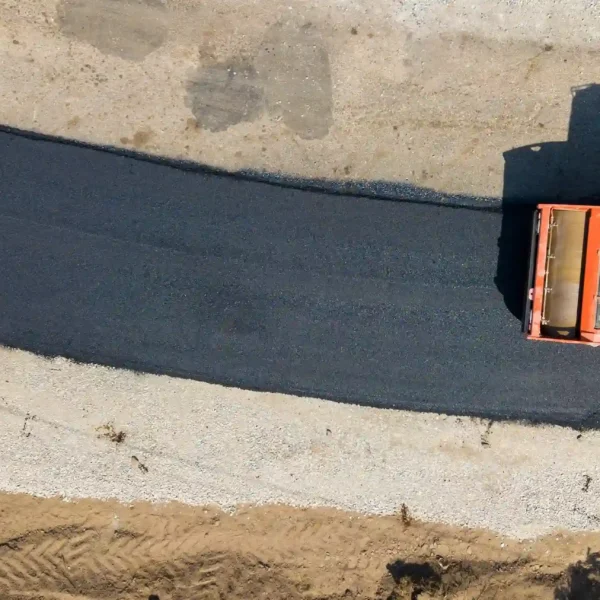
Asphalt pavement is made by combining crushed stone, gravel, and sand with hot liquid bitumen, creating a flexible surface that can better adapt to changing temperatures and everyday traffic. While the finished pavement gets most of the attention, its long-term performance depends heavily on what’s underneath it.
For commercial parking lots, a properly compacted 6 to 8-inch gravel base provides the support needed to handle daily vehicle traffic and helps prevent premature settling. Once the hot-mix asphalt is placed and compacted, most parking lots can reopen within 24 to 48 hours, making it a practical choice for businesses that want to minimize downtime during their paving project.
How Concrete Pavement Is Made and Installed
Concrete pavement uses crushed stone, sand, and gravel, bound together with Portland cement and water, to create a rigid surface designed for strength. Commercial parking lots typically require 4 to 6-inch concrete slabs, while loading docks, truck routes, and other heavy-use areas often need 6 to 8-inch slabs for heavier loads.
The biggest difference comes after the concrete is poured. Unlike asphalt, concrete needs time to cure before vehicles can use the surface, which usually means waiting about seven days before reopening the lot. Expansion joints are also cut throughout the pavement to help control cracking as the concrete naturally expands and contracts over time.
Cost Comparison: Asphalt vs. Concrete for Commercial Parking Lots
For most commercial property owners, cost is where the conversation starts. While the initial investment matters, it shouldn’t be the only factor driving your decision. Maintenance, repairs, expected lifespan, and daily use all shape the total cost of ownership.
| Cost Factor | Asphalt | Concrete |
| Typical Installation Cost | Lower | Higher |
| Upfront Investment | Lower | Higher |
| Routine Maintenance | More Frequent | Less Frequent |
| Major Repairs | Easier and Less Disruptive | More Involved |
| Typical Lifespan | 15 to 20 Years Before Resurfacing | 30 to 40 Years |
Upfront Installation Costs
If controlling upfront costs is your primary concern, asphalt generally has the advantage. Commercial concrete parking lots typically cost $2-$3 more per square foot than asphalt projects.
For larger commercial parking lots, that difference can add up quickly, making asphalt the more budget-friendly choice at the start of a project. However, upfront cost is only one part of the overall investment, which is why it’s worth considering long-term maintenance and expected lifespan as well.
Long-Term Maintenance and Lifecycle Costs
A lower installation cost doesn’t always translate to the lowest long-term cost. Asphalt benefits from routine maintenance, including sealcoating every 3 to 5 years, periodic crack filling, and resurfacing after 15 to 20 years, to help extend its service life.
Concrete generally requires less routine maintenance over time, though it still benefits from joint sealing and occasional repairs. For commercial properties expected to stay under the same ownership for decades, that longer lifespan can help offset the higher upfront investment.
Repair and Patching Costs When Damage Occurs
Asphalt repairs are typically quicker and more localized, allowing damaged areas to be patched without replacing large sections of pavement. If there’s a solid foundation, targeted parking lot repairs may be enough to extend its service life before it needs a full replacement.
On the other hand, concrete repairs tend to be much more involved. Cracked or damaged sections often require replacing an entire slab, making repairs more labor-intensive and potentially increasing downtime compared to asphalt.
Durability, Climate Performance, and Which Lasts Longer
A parking lot needs to do more than look good on opening day. It has to stand up to daily traffic, changing weather, and years of wear. When comparing concrete vs. asphalt, both materials can provide decades of reliable service when properly installed. The difference is how each responds to weather, traffic, and everyday wear.
How Each Material Handles Freeze-Thaw Cycles
Cold-weather performance is often where the differences between asphalt and concrete become most noticeable. Asphalt’s flexible surface moves with changing temperatures, helping reduce stress on the pavement. Concrete is more rigid, so repeated freezing and thawing can contribute to joint deterioration and slab cracking over time.
Regular wintertime maintenance is important for both materials, especially in regions where de-icing products are commonly used.
Heat and UV Exposure
Asphalt absorbs more heat and can soften during extended periods of high temperatures, especially in areas where vehicles frequently turn or stop. Regular sealcoating helps protect the surface from UV exposure and slows the oxidation that naturally occurs as asphalt ages.
Concrete reflects more sunlight and remains more stable in high temperatures, making it a good fit for properties exposed to intense sun or consistent heavy traffic throughout the day.
Load-Bearing Capacity for Commercial Traffic
When installed over a properly prepared base, asphalt offers ample durability for retail centers, office parks, and other locations with primarily passenger-vehicle traffic. Concrete is often the better choice for loading docks, truck courts, and other areas where heavy vehicles place repeated stress on the pavement.
Which Is Better for Your Commercial Property? A Use-Case Guide
For every area asphalt excels in, concrete rivals in its own way. Here’s where each one tends to make the most sense.
- Asphalt is typically the better fit for commercial properties with primarily passenger-vehicle traffic, especially when your priorities are controlling upfront costs and minimizing downtime during the project. Routine sealcoating and parking lot striping also simplify future maintenance.
- Concrete is often the better investment for properties that regularly support heavy truck traffic or owners planning to hold their property for decades. Its higher upfront cost is often offset by its longer lifespan and lower maintenance requirements. For these projects, working with an experienced concrete paving contractor helps ensure the pavement meets your site’s demands.
- Many commercial properties benefit from both! Using asphalt for the main parking areas and concrete in high-stress locations, such as loading zones, entrance aprons, and dumpster pads, gives you the durability of concrete where it’s needed most without paying for it across the entire lot.
FAQs
Is asphalt or concrete better for a commercial parking lot?
For most commercial properties, asphalt is the practical choice because it costs less upfront, goes in faster, and is easier to repair. If your property sees frequent heavy truck traffic or you’re planning to own it for decades, concrete may be worth the additional investment. There’s no universal winner, which is why many commercial projects use both.
How much does a commercial parking lot cost?
Cost depends on the size of the lot, site conditions, drainage, and the material you choose. The best way to compare asphalt vs. concrete costs is to schedule a site-specific estimate.V
Which lasts longer, asphalt or concrete?
Concrete generally lasts longer before major work is needed, but that doesn’t mean asphalt has a short life. A well-maintained asphalt parking lot can provide decades of service with periodic resurfacing instead of a full replacement.
Which material handles winter better?
If your property experiences regular freeze-thaw cycles, asphalt usually has the edge because its flexible surface moves with changing temperatures. Concrete performs well too, but it relies more heavily on properly maintained joints and can be more susceptible to cracking over time.
Can my parking lot be repaired instead of replaced?
In many cases, yes. If the underlying foundation is still in good condition, repairs or resurfacing may restore the pavement and extend its lifespan without the cost of a full replacement. If you’re weighing your options, our parking lot repair services can help determine whether repair or replacement is the right choice.
Still Deciding Between Asphalt and Concrete?
Whether you’re leaning toward asphalt, concrete, or a combination of both, the right choice starts with a closer look at your property. Get an estimate from National Pavement Partners to compare your options and find the solution that’ll support your property for years to come