Most commercial parking lots follow a parking lot sealcoating schedule of about every two to three years. However, traffic, weather exposure, coating wear, and pavement condition determine when yours actually needs another application.
Instead of sealcoating on a fixed calendar, inspect the pavement regularly and plan maintenance around its condition. The right schedule protects your investment and avoids unnecessary work and costs.
In this guide, we break down how often to sealcoat parking lots based on traffic, climate, and pavement age.
What Does Asphalt Parking Lot Sealcoating Do?
Asphalt parking lot sealcoating applies a protective coating to your pavement’s surface, protecting it from oxidation, water, and other environmental factors that contribute to deterioration. Sealcoating works best as part of a broader parking lot maintenance program that includes inspections, cleaning, crack treatment, and repairs. It does not restore pavement strength or correct structural damage.
How Often Should You Sealcoat a Parking Lot?
Most commercial properties should be sealcoated every two to three years. When deciding how often to sealcoat asphalt, consider traffic patterns, climate, previous coating wear, and the condition of the pavement underneath. You can better plan your budget by scheduling annual pavement inspections to identify wear and schedule work before problems grow.
Traffic Volume and Where Wear Occurs
Entrances, exits, turning areas, drive lanes, loading areas, and other high-traffic sections often experience more wear than lightly used parking spaces. Document these differences during inspections, as worn traffic lanes may need further assessment before scheduling property-wide sealcoating.
Climate and Local Site Conditions
Below are some of the different environmental stresses that impact sealcoating schedules across National Pavement Partners‘ service area:
- Colorado: Freeze-thaw cycles, winter moisture, and deicing materials
- Arizona: Intense UV exposure, prolonged heat, and monsoon weather
- New Mexico: Elevation, UV exposure, and temperature swings
When Is Newly Paved Asphalt Ready for Sealcoating?
No universal waiting period applies to every pavement and product. In general, you should schedule your first sealcoat 2 years after new pavement installation and every 2-3 years thereafter. New asphalt should meet the selected sealer’s curing and surface-preparation requirements before the first application.
How Long Does Sealcoating Last?
Sealcoating may last several years, but wear varies based on traffic, pavement condition, preparation, application, and weather exposure. That is why the time between applications should not be based on age alone. Regular inspections provide a better picture of when the coating has worn enough to warrant another application.
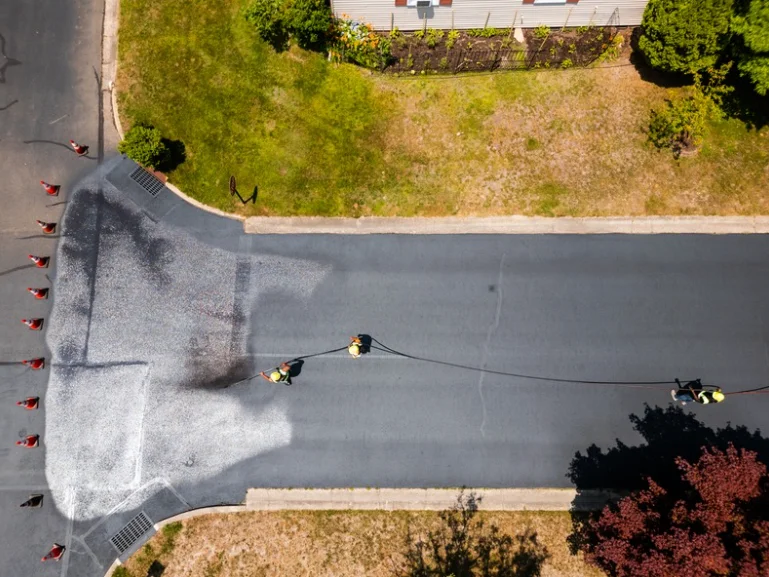
Surface Preparation and Necessary Repairs
Proper preparation gives the sealer a suitable surface for application. Ask your contractor to clearly identify preparation in the project scope. Typical sealcoating preparation steps include:
- Cleaning the pavement
- Treating cracks
- Parking lot repair services, as needed
Product Selection and Application
Ask which sealer the contractor proposes and how the crew will follow the manufacturer’s specifications. Their application rate, mixing, coat count, and drying intervals should match the selected product.
Conditions During Drying and Reopening
A surface that looks dry may not be ready for its intended traffic. Follow your contractor’s reopening instructions based on your site’s traffic exposure and the forecasted weather. Before work begins, confirm when pedestrians, striping crews, and vehicles may safely return to treated areas.
Signs Your Parking Lot Is Ready for a Sealcoating Assessment
If you are sealcoating a parking lot on a planned maintenance cycle, inspect it as the next target date approaches. Worn coating along traffic paths, noticeable changes in surface texture, and fading justify a closer assessment. Keep photos of recurring problem areas and records of previous applications. A professional inspection will determine whether the property needs continued monitoring, preparation and sealcoating, or more substantial pavement repairs.
When Repairs Should Come Before Sealcoating
Parking lot sealcoating does not replace crack treatment, pothole repair, or structural rehabilitation. Potholes, standing water, spreading fatigue cracking, significant material loss, settlement, and other pavement failures require separate repair solutions. For extensive deterioration, compare patching, resurfacing, and reconstruction to determine which service best matches the pavement condition.
How to Schedule Sealcoating Around Your Business
A good sealcoating plan accounts for your pavement needs and daily operations. Before the project starts, confirm the project scope, weather contingencies, and reopening requirements with your contractor.
Confirm Preparation and Repair Work
Review which cleaning, crack treatment, patching, and other preparations the proposal includes. Confirm who will move vehicles and protect adjacent surfaces before sealcoating.
Plan Closures and Weather Contingencies
Ask whether your contractor will phase the work to maintain property access while they work. Notify tenants, employees, customers, and delivery providers about closures, alternate parking, and access routes, and follow the contractor’s schedule for application and reopening.
Coordinate Parking Lot Striping
Don’t forget to include parking lot striping in the project plan when stalls, directional markings, or designated access areas require restoration.
FAQs
How often should a parking lot be sealcoated?
Most commercial parking lots should be sealcoated every two to three years. Traffic, weather, coating wear, and pavement condition determine the actual schedule.
How long does sealcoating last on a commercial parking lot?
Parking lot sealcoating typically lasts several years depending on traffic, weather, preparation, and material specifications. Regular inspections provide a better basis for determining when another application is appropriate.
Should a commercial parking lot be sealcoated every year?
Not necessarily. Inspect the pavement annually, but schedule reapplications based on coating wear, pavement condition, and the selected product’s guidelines.
How soon can new asphalt be sealcoated?
New asphalt should typically be sealcoated after two years, but it must meet the selected sealer’s curing and preparation requirements. Ask your paving contractor for a recommendation based on the pavement and proposed product rather than following a universal waiting period.
Does sealcoating fix cracks, potholes, or standing water?
No. Sealcoating does not replace crack treatment, pothole repair, structural repairs, or drainage corrections.
How much does commercial parking lot sealcoating cost?
Parking lot sealcoating cost depends on area size, preparation, repairs, material specifications, site access, and project phasing. Request an itemized scope so you can compare sealcoating, crack treatment, repairs, and striping separately.
Build Your Sealcoating Schedule
Annual inspections, not the calendar, are key to developing effective maintenance schedules. National Pavement Partners provides professional assessments to evaluate your pavement’s condition and help build a practical parking lot sealcoating plan for your property.