Deciding between concrete repair and concrete replacement can have a major impact on your property’s long-term maintenance costs. Concrete repair may seem like the less expensive option upfront. However, factors like damage severity, future maintenance needs, lifespan, and business disruptions all play a role in determining which solution delivers the best value.
With 45+ years of commercial pavement experience, National Pavement Partners has seen firsthand when repairs are enough and when replacement becomes the smarter investment.
This guide will walk you through the key factors to consider when weighing concrete repair vs. replacement, including damage assessment, cost analysis, and project timelines.
Understanding Concrete Damage Types and Severity
Concrete damage generally falls into four categories: surface wear, structural cracks, settlement issues, and complete deterioration. Minor surface wear may only need repair, while widespread cracking, uneven slabs, or damage affecting more than 30% of the surface make concrete replacement the better long-term investment.
Surface-Level vs. Structural Issues
Surface-level damage affects the appearance of the concrete’s top layer, while structural damage affects the slab’s load-bearing ability. Small cracks under 1/4 inch wide or shallow spalling are generally repairable, but deep cracks, widening gaps, or broken sections often point to load-bearing problems.
When Damage Indicates Deeper Problems
Uneven slabs, recurring cracks, standing water, or sinking areas can signal drainage issues or sub-base failure beneath the concrete. In these cases, repairing the surface may only treat the symptom. Concrete replacement allows the contractor to address the root cause before installing new concrete.
When Repair Makes Sense (and When It Doesn’t)
In many cases, concrete repair can extend the life of a pavement surface and delay the need for replacement.
Repair may make sense if:
- Cracks are less than 1/4 inch wide
- Surface spalling is less than 1 inch deep
- Damage is isolated rather than widespread
- Less than 30% of the concrete surface is affected
- The concrete is structurally stable with no major settlement issues
- Previous repairs have performed well over time
- A shorter-term solution aligns with your maintenance budget and plans
If multiple items on this list do not apply to your property, it may be time to consider concrete replacement instead.
Repair Methods and Their Limitations
Common repair methods include crack filling, patching, and resurfacing. Crack filling can help prevent moisture intrusion, patching addresses isolated damaged sections, and resurfacing improves worn concrete without full removal. These solutions can extend service life, lasting anywhere from a few years to a decade depending on traffic levels, weather exposure, and existing concrete conditions.
Signs Repair Will Fail Long-Term
Recurring cracks, repeated patch failures, and ongoing settlement often indicate an unresolved underlying problem. Older concrete surfaces, poor drainage, freeze-thaw cycles, and heavy commercial traffic can accelerate deterioration, making repeated repairs increasingly expensive. When the same areas require multiple repairs over time, concrete replacement is typically more reliable and cost-effective.
Cost Analysis Framework: Repair vs. Replacement
The upfront cost of repair is typically lower than concrete replacement, but long-term costs tell a different story. When evaluating your options, consider labor, materials, future maintenance, and potential business disruptions over the next 10 to 20 years.
Hidden Costs of Multiple Repairs
Repeated repairs can add up quickly, especially when damage continues to spread or return. Frequent maintenance may also create ongoing disruptions for employees, customers, and daily operations.
Long-Term Value of Replacement
Properly installed commercial concrete can last 25 to 30 years or more with routine maintenance. While concrete replacement costs more upfront, it often reduces future concrete repair costs and typically comes with stronger warranty protection than repair work.
Project Timeline and Business Impact Considerations
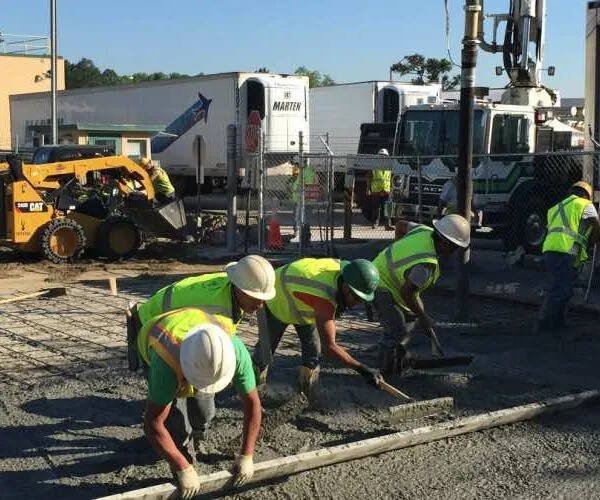
Concrete repair usually takes 1 to 3 days, while commercial concrete replacement can take 5 to 10 days or longer depending on the project size. For active properties, projects are phased to account for access needs, customer traffic, employee parking, delivery routes, and overall disruption to daily operations.
Seasonal Considerations
Concrete work is typically most successful during moderate weather, when temperatures support proper placement and curing. Extreme heat can cause concrete to dry too quickly, freezing temperatures can weaken curing concrete, heavy rain can damage the surface before it sets, and rapid temperature swings can increase the risk of cracking.
These conditions can affect project timelines, material performance, and the timing of when the surface can safely reopen.
Choosing the Right Concrete Contractor
The right concrete contractor should have proper licensing, bonding, insurance, and proven commercial concrete experience. If you’re searching for concrete replacement near you, look for a team that leads with an honest assessment rather than pushing the most expensive option.
National Pavement Partners provides concrete paving services across commercial properties and supports businesses throughout Colorado.
Evaluating Contractor Assessments
Look closely at what each proposal includes when comparing multiple assessments. If parking lot repair bids vary widely, for example, check to see what’s included, such as demolition, sub-base preparation, drainage corrections, curing time, and warranty coverage.